|
"Soft and hard" combined anti-seepage tool: how composite geomembrane safeguards the foundation of modern infrastructureTime:2026-09-16 Whether it's a towering dam or a harmless landfill site, the success of modern water conservancy and environmental protection projects often hinges on an invisible yet crucial "defense line" - the impermeable barrier. In the past, the engineering community relied heavily on traditional rigid materials such as concrete and clay to resist water flow. Nowadays, a revolution in flexible materials has quietly taken place. Empowered by polymer technology, a composite impermeable geomembrane with excellent toughness and performance is taking up the mantle of impermeability for infrastructure in the new era. So, what exactly makes this "composite membrane" stand out, and how has it become a "must-have" in engineering?
From traditional seepage prevention to material innovation: the evolution of seepage prevention concepts For a long time in the past, engineers primarily worked with "rigid" materials. Representative examples of such materials include concrete and clay, which rely on their dense molecular or granular structures to physically block water flow. For instance, various types of concrete, with their high strength and low permeability coefficient, occupy a prominent position in fields such as dams and cofferdams, while locally sourced and economical clay layers play a significant role in specific hydrological environments. However, this seemingly reliable rigid material is not without its shortcomings. Brittleness and the risk of cracking have always been hidden concerns that plague large-scale, long-life projects. After entering the era of the rise of "flexible materials", the concept of materials has undergone a transformation, with the core being "overcoming rigidity with toughness". Flexible impermeable materials, typically represented by single geomembranes, have a permeability coefficient as low as 10⁻¹⁴ cm/s, which can effectively adapt to uneven settlement of the foundation and avoid failure due to structural deformation. High-density polyethylene (HDPE) membranes have become the star protagonist on the impermeable stage due to their long service life and erosion resistance.
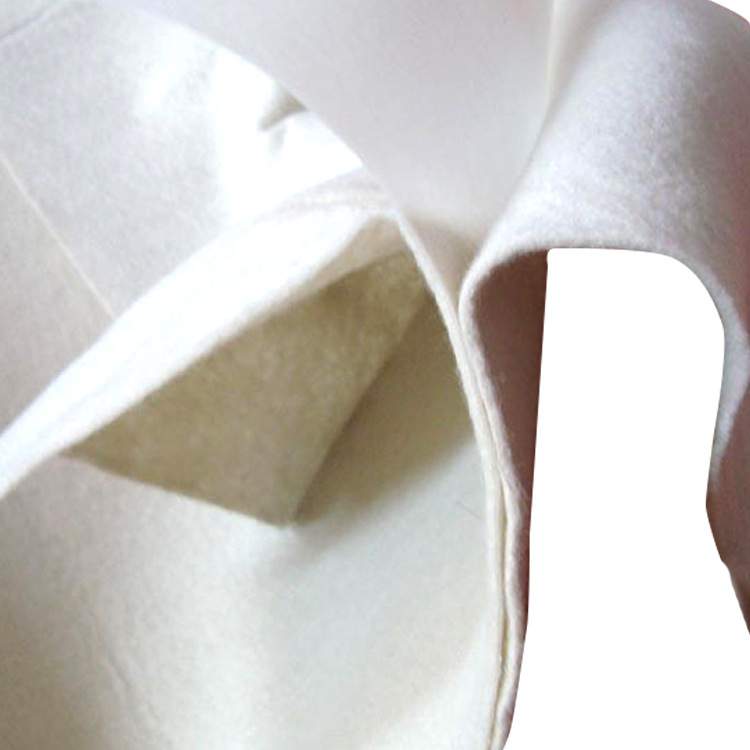
In this process, scientists have further invented a "combination" that can be described as both rigid and flexible - composite geomembrane. Composite geomembrane: Unveiling the Trinitarian Performance Composite geomembrane is not simply a single layer of membrane material; it represents the pinnacle of impermeable material technology. Its technological essence lies in the innovative combination of the impermeability of plastic film with the excellent reinforcement and protective properties of non-woven fabric. Its structure and principle are very intuitive and effective: Firstly, the core intermediate plastic film, typically made of flexible polymer materials such as HDPE or PVC, serves as the "soul" of waterproofing. It imparts low permeability (reaching the order of magnitude of 10⁻¹³ cm/s), extensibility (up to 700%), and durable corrosion resistance to the composite film, effectively blocking the pathway for moisture penetration. The "soul" of a single-layer waterproofing seems somewhat thin - this leads to its second functional layer: the outer nonwoven fabric, typically made by needle-punching and thermally bonding short fibers of materials such as polyester. Its introduction brings multiple benefits, not only enhancing the tensile strength, puncture resistance, and tear resistance of the geomembrane itself, but also creating enhanced mechanical forces on both sides through thermal bonding with the film. In practical applications, the uneven surface of the nonwoven fabric can also significantly increase the frictional resistance when in contact with the external soil layer. This combination forms a three-in-one function of impermeability, reinforcement, and protection, significantly reducing the situation where a single geomembrane is easily damaged by sharp corners and aggregate particles during on-site construction, leading to the breakage of the protective layer. Spreading defense line: from design selection to practical application
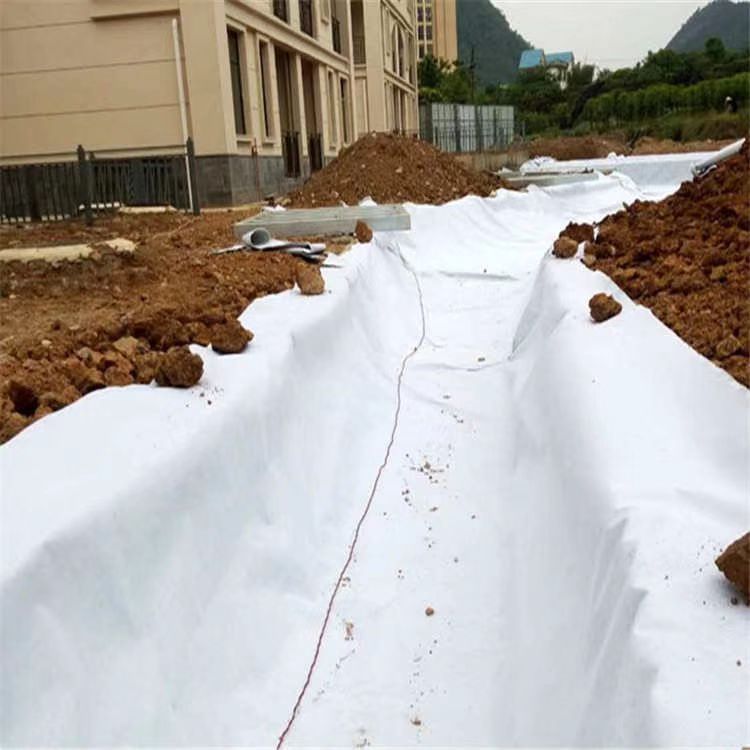
A good project cannot be separated from rigorous deployment. Based on the requirements of the water conservancy department and relevant standards, the key to ensuring the durability and effectiveness of the composite geomembrane impervious structure lies in the careful construction of the composite membrane impervious system. This entire waterproofing project consists of four major components: the base layer design from bottom to top, the core membrane material, the protective layer with strictly controlled particle diameter (no more than 6 millimeters), and the upper protective surface. The success of the entire impervious structure construction depends on the high degree of coordination and cooperation in each link. In practical application, the designer must first select the appropriate combination model based on the water head size and geological conditions in the application environment. The market offers a wide variety of combination specifications, with common forms including a combination of one cloth and one membrane, a packaging structure combining one cloth with membranes on both sides, and configurations with two cloths, one membrane, or even multiple cloths. The choice should be determined based on the load requirements and usage environment. After selecting the model, it is necessary to determine the area range for membrane laying, anchoring and overlapping schemes, and confirm the necessary thickness of the protective layer based on slope calculations, laying a technical foundation for subsequent construction. |